
Scaling for Megaprojects: The Team that Builds the Team
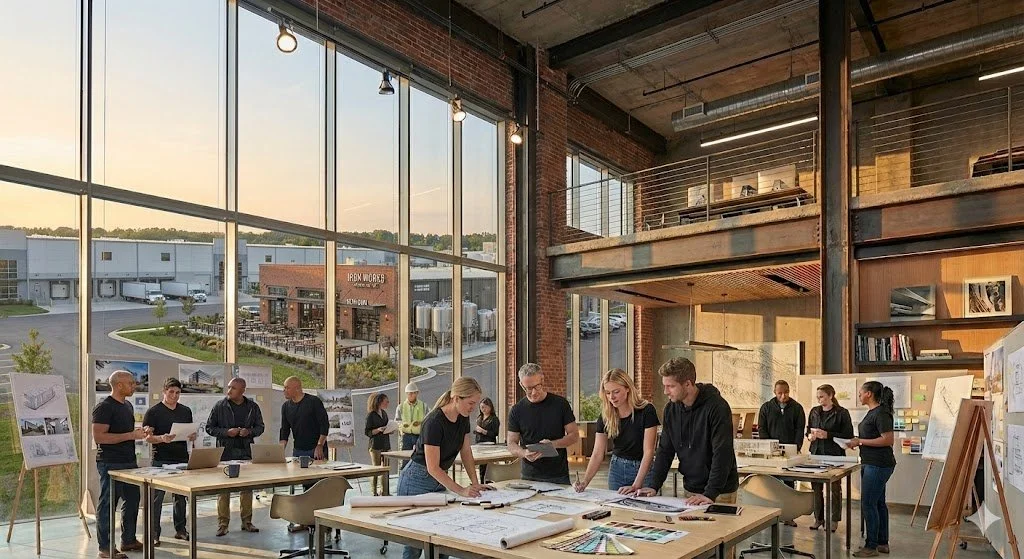
Just like a business doesn’t succeed or fail on the merit of the idea alone, a megaproject is made or broken by its founding members.
No one will care about your project the way you do.
The EPC Trap: Why You Can’t Outsource Ownership
There is a pervasive and expensive illusion that plagues executive teams embarking on their first major capital project. It usually starts with a statement that sounds reasonable:
"We aren't construction experts. We build widgets, not factories. Why would we try to manage this ourselves? Let's just hire a top-tier EPC." It is a seductive logic. It promises a single throat to choke, a guaranteed or data-driven price, and a hassle-free path to a ribbon cutting. To back this decision, they point to the industry behemoths—the massive manufacturing and tech giants—who use these exact same EPC firms to build their mega-factories. The logic follows: If it works for the giants, surely it’s the safe play for us.
Here is the part they miss.
When those behemoths hire an EPC, they aren't just handing over the keys and walking away. They are deploying a massive internal "Owner's Team" to sit on the other side of the table. They have hundreds of their own engineers, schedulers, and project managers managing that EPC every single day. They understand a fundamental truth about construction: The EPC provides the muscle, but the Owner must provide the brain. If you hire the muscle without the brain, you do not get a project built to your vision or your best interests. You get a project built to the EPC’s convenience.
You cannot outsource the role of the Owner. If you don't build a small, elite team to define the "what" and the "why" before the army of "how" arrives, you lose control of your project very early, even while you’re still in concept iteration: how big should we build, how fast should we go, what do our financials look like? Without an owner's team to sanity-check requirements, you are negotiating against a partner whose primary incentive is risk elimination (and their own profit), not value creation. The EPC will convince you that the problem is far more complex than it really is. They will advocate for standard, off-the-shelf solutions that they have built a dozen times before—not because those solutions are right for your specific technology, but because they are safe for their guaranteed maximum price.
They will tell you that you need a ton of space in the layout for operability, or more height for stacked equipment, or massive redundant capacity "just to be safe." And because you lack the technical expertise to push back, you will believe them. This isn't just about ballooning costs; it is about the calcification of your original vision. You end up paying a premium for a facility that is over-engineered for safety but under-engineered for performance. Innovation requires doing something different, but EPC contracts are designed to punish deviation. If you rely on them to define the boundaries of your project, you have already decided that innovation is a liability rather than an asset. Only the Owner can truly value-engineer the project by defining what is and is not necessary. The EPC can optimize, but the Owner can cut.
The “Tiger Team” Mindset
Does owning your destiny mean you need to replicate the behemoths and hire hundreds of engineers and PM’s before you break ground? Absolutely not. You are not building a dynasty (yet); you are executing a mission. The people you hire early on, while the technology and scale-up roadmap is still being defined, are your mission control. There are a few reasons for this: the early decisions on the Basis of Design often have a multiplier effect on the final outcome, and hiring innovative engineers and builders early and showing them what you know, and what you don’t, and what you need to protect for, enables them to design for ambiguity. The program and project managers can phase the program to match the ambiguity, rather than only having two bad options of delays or rework.
This also isn't just about finding people with the right resumes. You can find plenty of people with 20+ years of experience who will happily help you sleepwalk into a disaster because "that's how we've always done it." You need the specific breed of expert who understands the rules well enough to know which ones to break. You need people with a high tolerance for ambiguity, which is also not easily found in experts or industry veterans. Early-phase projects are uncertain by nature. The design is conceptual. The risks are blurry. There’s no standard playbook, because every project is a different mix of unknowns, constraints, and politics.
Why the Right People Matter More Than Process
Don’t get me wrong, process is important, and we’ll talk later about how to phase a project and map out interdependences in decisions between organizations to improve your decision-making. But even with a solid process, early schedules, decision trade-off analyses, and risk matrices, someone still has to make judgment calls early in the project, usually fast, and with bad or incomplete data. And if they don’t know how to read a system, understand risk, or recognize when they've locked in something irreversible, no amount of governance is going to fix it later.
It’s not just the decisions themselves that matter, it’s the order in which they get made, and the default assumptions they carry downstream. Choose a site before defining your utility strategy, and you might box yourself into major upgrades. Pick your contracting model before scoping is clear, and procurement gets stuck reverse-engineering the structure. Award long-lead equipment based on vendor preference, and design ends up warping around constraints no one priced in.
Plenty of these decisions can be changed later, but most aren’t. Not because they’re technically impossible, but because they’re politically expensive. Once something gets written into a contract or backed by an executive, reversing it takes power and appetite, something only a few of your most determined lieutenants below the leadership tier would ever attempt. That’s why it’s not enough to staff early; you have to staff well. The first few hires won’t outnumber the chaos, but they can shape how flexible—or brittle—your project becomes. They influence scope, structure, design logic, and information flow, and above all, cost and schedule.
You want people who don’t just “get things done,” but know which decisions carry weight and which ones can wait. Who see across design, construction, cost, and contracts, and know how to move through ambiguity without spinning their wheels. You also want people with a true ownership mindset, who don’t just do their job, they step in when something feels off. They chase it down early, while there’s still time to course-correct. This section is about those people: who they are, how to spot them, and how to build a team that won’t just survive a megaproject, but shape it for the better from day one.
In the next few posts we’ll be talking about each member of the team, why they’re needed, where to look for them, and what to look for.
